Driving practice3 min read
Turning right in Australia: who goes first at the lights?
A right turn in Australia crosses the oncoming lanes. On a green light with no right arrow, oncoming traffic goes first; on a red right arrow, you wait.
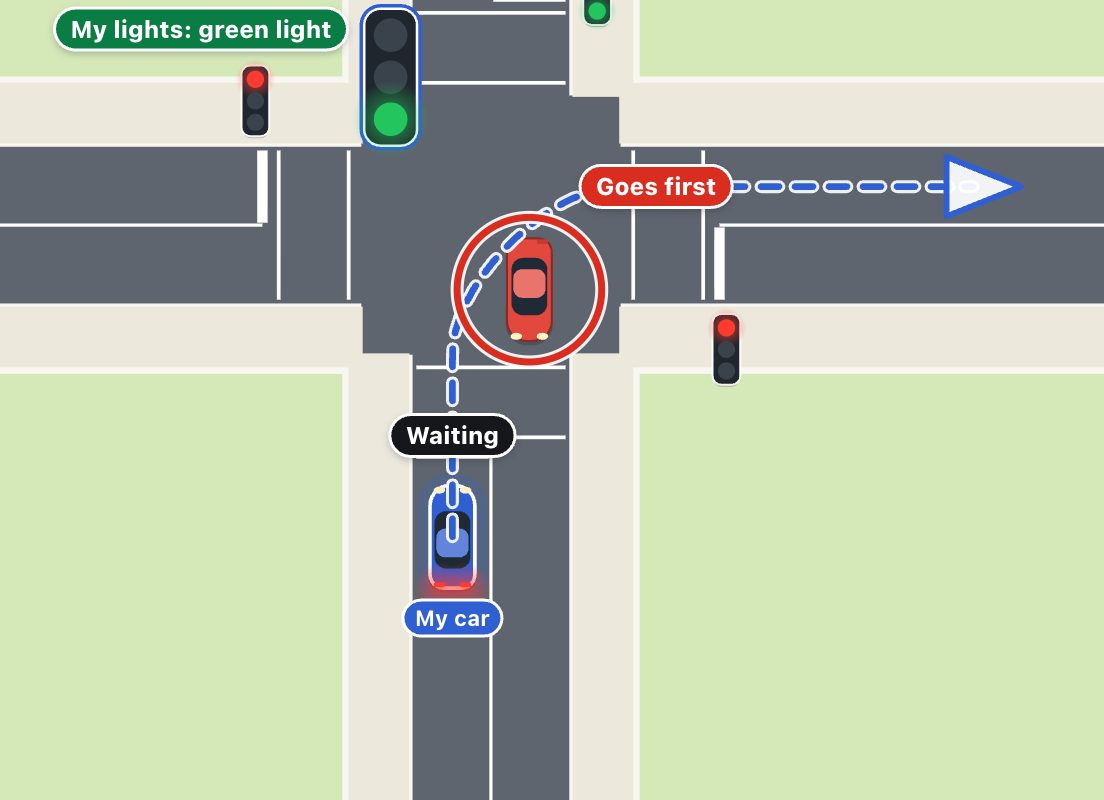
You have just picked up the hire car, the light ahead is green and you need to turn right. If you learned to drive on the right-hand side of the road, turning right in Australia is the manoeuvre that feels back to front: traffic keeps left here, so the right turn is the one that cuts across the oncoming lanes.
The rule: on a green light with no green right arrow, oncoming traffic goes first. You turn once it has passed or there is a safe gap. If a red right arrow is lit, you must not turn right at all, even when the green light is on.
The picture above shows the first case: my light is green, but the red car coming towards me goes first.
How do you turn right at traffic lights?
- Get into the right lane, or a lane with a right arrow painted on the road, and switch on your right indicator.
- Read the whole set of lights. Is an arrow lit beside the green or red light?
- Green light, no arrow: let oncoming cars going straight or turning left go first, then turn.
- Red right arrow: stop behind the stop line and wait until the arrow turns green or goes out.
- Green right arrow: you can turn right.
- In every case, give way to pedestrians crossing the road you are turning into.
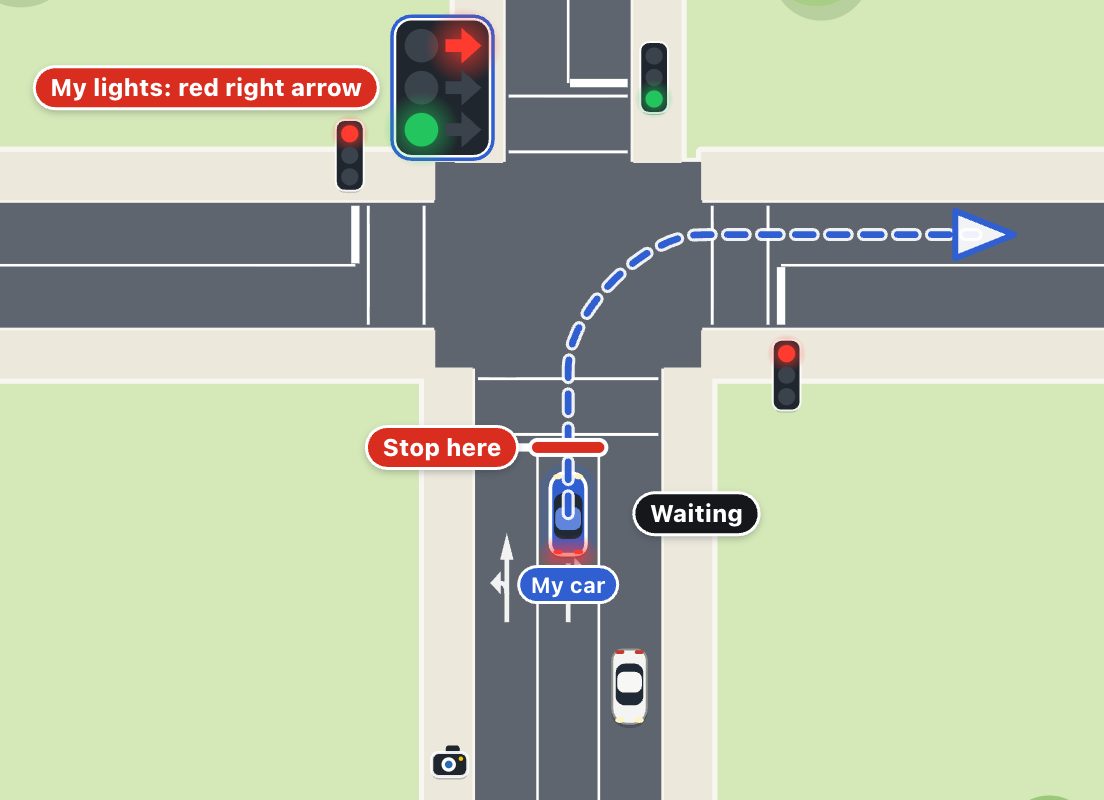
The NSW Government's traffic lights page says it in one line: "A red arrow means you must not turn."
How do you turn right across a divided road?
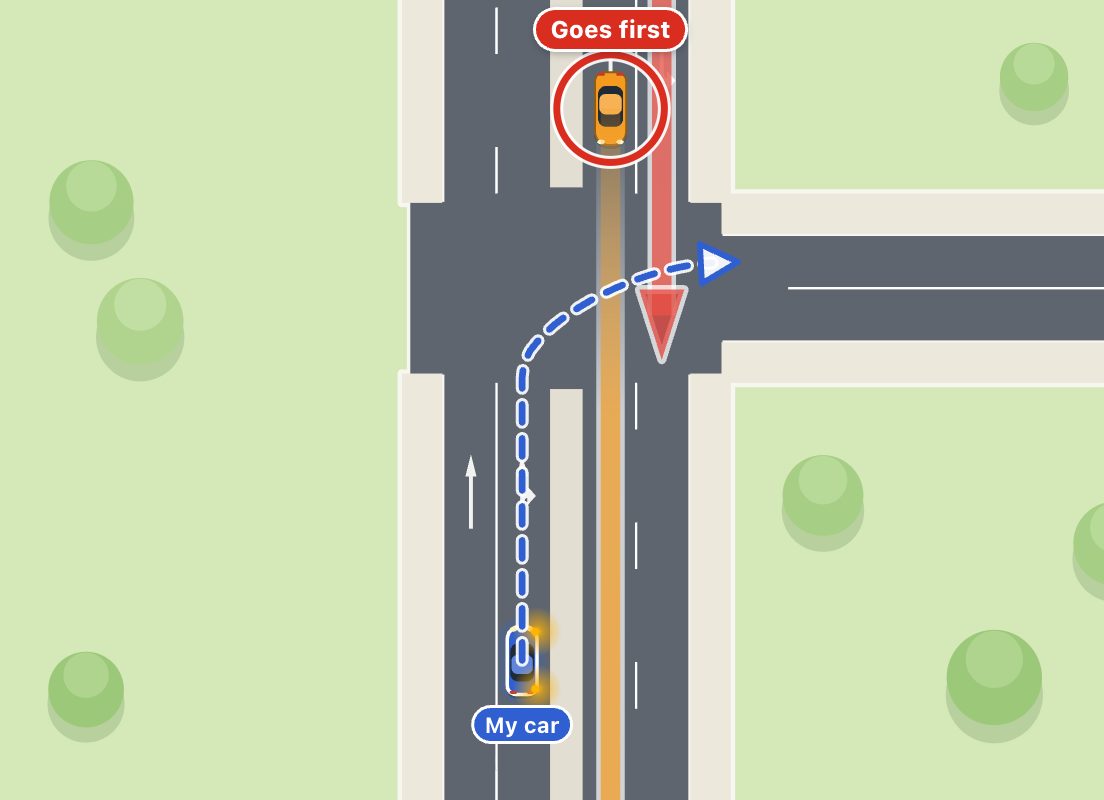
Away from the lights you will often turn right through a gap in the median strip, with nothing to tell you when to go. The idea is the same: give way to oncoming vehicles going straight ahead, and to oncoming vehicles turning left into the road you want. On a divided road that means checking every oncoming lane, not just the nearest one. The rule is on the NSW intersections page.
What does the mistake cost?
The mistake to avoid is reading a green light as "my turn". In NSW (New South Wales, Sydney's state), not giving way to an oncoming vehicle when turning right at lights is a A$423 fine, and not stopping at a red arrow is A$562 (official list as at 1 July 2025; check the current amount).
Is the rule the same in every state?
Giving way to oncoming traffic applies across Australia, but rules and fines differ between states. Queensland's list (1 July 2026) puts the same mistake at lights at A$518. Two local extras: some intersections in and around central Melbourne have a "hook turn only" sign, where the right turn starts from the far left lane, and Tasmania limits turns at traffic lights to 20 km/h.
Two more things that work differently here: turning left on a red light and roundabouts.